Symbionic Teeth represent a quantum leap forward in the evolution of tooth replacement. Symbionic Teeth are tooth-root–shaped medical devices that are placed into the jawbone and restored with crowns for tooth replacement.
The Key Difference From Dental Implants
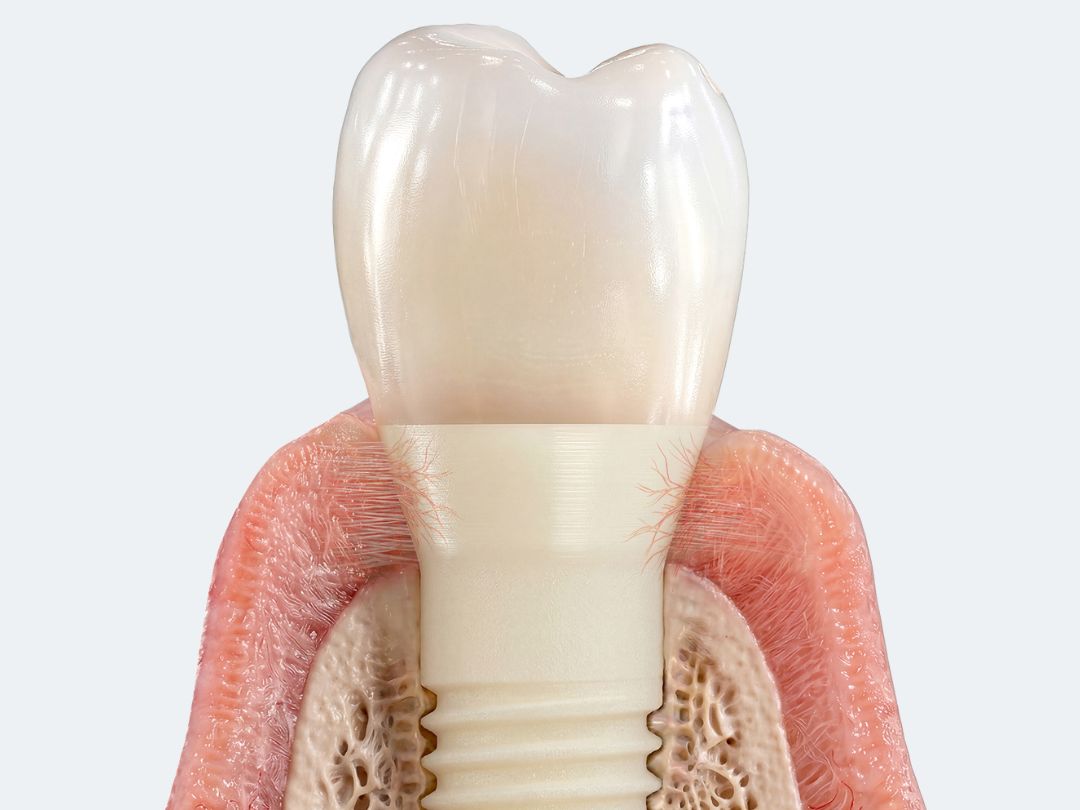
Dental implants integrate only with the jawbone. Symbionic Teeth, however, go one step further: they additionally establish a defense barrier in the transmucosal region – by bonding with the surrounding soft tissue.
The mucosal defense barrier protects the tissue around a Symbionic Tooth from plaque migration – the key driver of tissue inflammation in dental implants. A meta-analysis found that two-thirds of patients with dental implants suffer from inflammation (22% peri-implantitis and 43% mucositis; Derks & Tomasi 2015).
With their mucosal defense barrier, Symbionic Teeth thus represent a major advancement over today's dental implants (0% peri-implantitis; Brunello, 2022; Karapataki, 2023).
The Main Clinical Benefit
The key benefit of the mucosal defense barrier lies in its biological function. When the surrounding tissue remains healthy and free from inflammation, mucosal recession does not occur. As a result, the initial esthetic outcome of the restoration achieved by the treating dentist remains stable over the long term.
This was demonstrated in a long-term clinical study conducted at the University of Düsseldorf (Germany), which reported an average mucosal recession of just 0.1 mm (±0.2 mm) after 9 years across all evaluated Symbionic Teeth, indicating long-term stable esthetics.
Contact Patent Medical today and start your journey with Symbionic Teeth – the next generation of tooth replacement solutions!