Every time you see that inflamed soft tissue or the bone loss that keeps getting worse, you know. You did everything right — and it's still happening. There's a reason mucositis and peri-implantitis rates keep climbing, and it has nothing to do with your technique.
What if the problem isn't your technique — but the implant itself?
You placed the implant precisely. You followed the manufacturer's protocol. You delivered beautifully restored, well-integrated prosthetics. And yet — a few years later — the inflammation starts anyway. That is not your failure. It is a predictable consequence of how traditional dental implants are engineered.
Natural teeth form a defense barrier where they meet soft tissue — a tight epithelial attachment that actively blocks plaque migration into the surrounding tissue. Dental implants achieve osseointegration and stop there.
Without this barrier, the soft-tissue interface remains permeable by design: plaque migrates apically along the implant surface, penetrates the soft tissue, reaches deeper tissue layers, and inflammation follows — not because of poor technique or patients with poor oral hygiene, but because the biology was always going to respond this way.
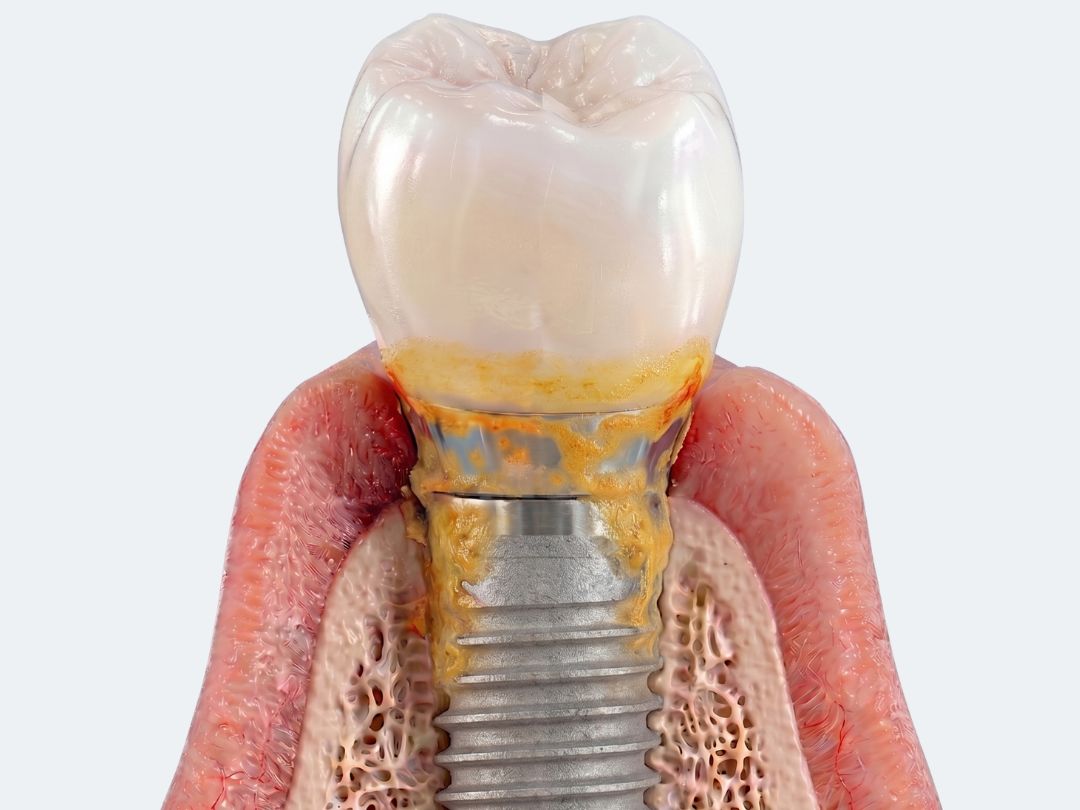
This is why even the most disciplined clinicians, with the most diligent patients, keep encountering mucositis and peri-implantitis. The data has been pointing at this mechanism for decades.
Symbionic Teeth are engineered to change that.
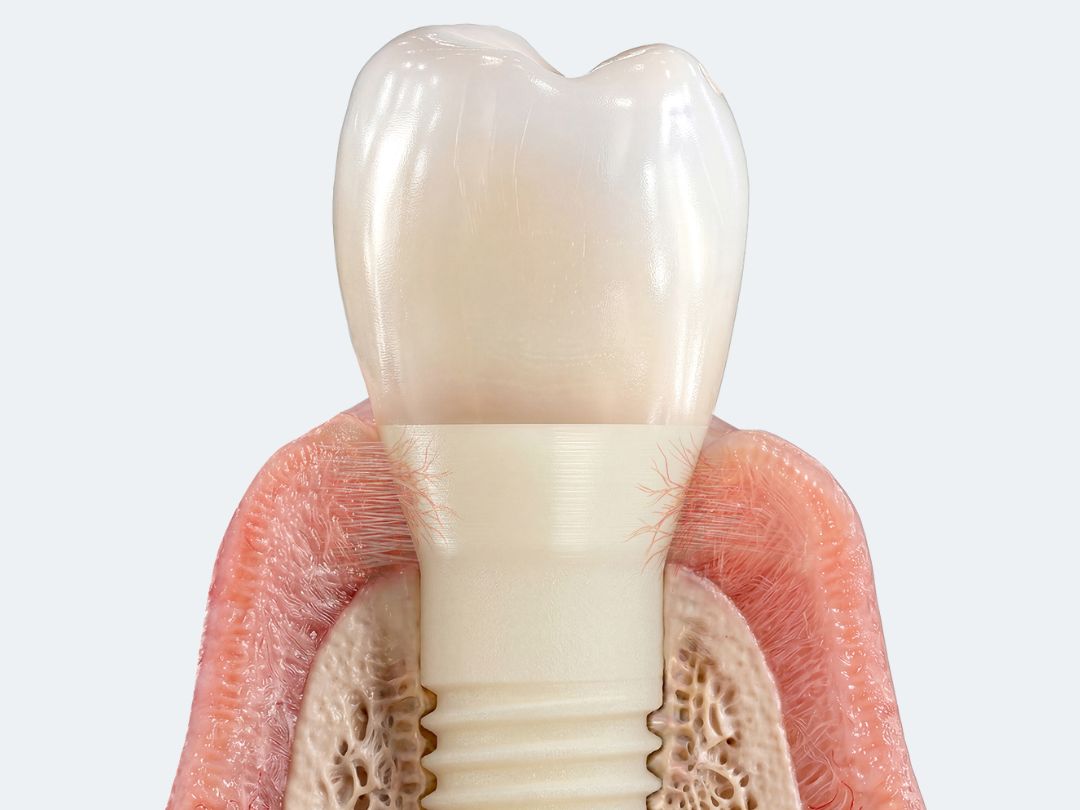
Like dental implants, Symbionic Teeth integrate into the jawbone — but at the transmucosal level, their surface is designed to establish a mucosal defense barrier analogous to that of a natural tooth, actively resisting plaque migration into the surrounding tissue.
The clinical evidence is compelling: in a 9-year cohort study (Brunello et al., 2022, COIR), not a single case of peri-implantitis was diagnosed. In a prospective study with up to 12 years of follow-up (Karapataki et al., 2023, JOMI) — including high-risk patients with cancer, diabetes, and Multiple Sclerosis — success was 100%, with zero peri-implantitis cases reported.
With their mucosal defense barrier, Symbionic Teeth represent the next step in the evolution of dental implants.
Ready to offer your tooth loss patients a solution that is fundamentally different? Explore Symbionic Teeth - the tooth replacement solution of the next generation.