Symbionic Teeth are the first tooth replacement solution to create a mucosal defense barrier, providing tissue protection comparable to the soft-tissue barrier of a natural tooth. Symbionic Teeth therefore represent the logical next step in the evolution of dental implants.
A mucosal defense barrier results from oral soft tissue bonding to the collar of a Symbionic Tooth. This has been scientifically demonstrated for the first time with Symbionic Teeth of the Patent™ brand (see image below).[1-3]
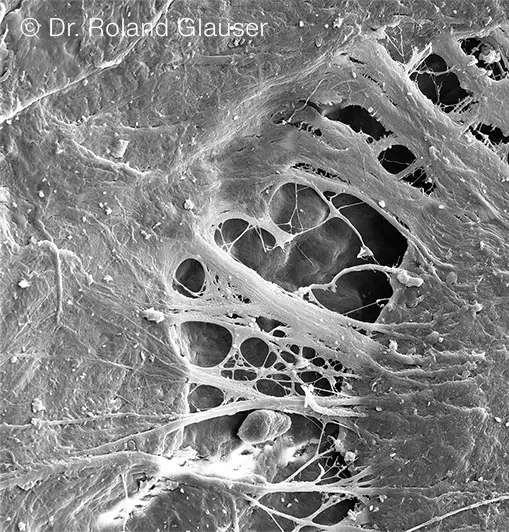
The mucosal defense barrier around Patent™ Symbionic Teeth protects the tissue from plaque migration and bacterial invasion. This medical breakthrough enables tooth replacement specialists to maintain tissue health in their patients and to drastically reduce—and even completely prevent—the typical side effects associated with dental implants (43% mucositis and 22% peri-implantitis[4]). According to long-term studies, this is key to achieving stable esthetic results.[5, 6]
References:
1. Bosshardt D. Soft Tissue Healing and Soft Tissue Barrier Around Oral Implants. Presented at: Oral Health Research Congress; September 12–14, 2024; Geneva, Switzerland.
2. Glauser R. Soft tissue bond—the missing element for the prevention of peri-implant diseases? Presented at: EuroPerio 11 Congress; May 14–17, 2025; Vienna, Austria.
3. Sculean A. The novel Zero Peri-Implantitis Concept—a valid treatment option for perio patients? Presented at: EuroPerio 11 Congress; May 14–17, 2025; Vienna, Austria.
4. Derks J, Tomasi C. Peri-implant health and disease. A systematic review of current epidemiology. J Clin Periodontol. 2015;42 Suppl 16:S158-71. doi:10.1111/jcpe.12334
5. Brunello G, Rauch N, Becker K, Hakimi AR, Schwarz F, Becker J. Two-piece zirconia implants in the posterior mandible and maxilla: A cohort study with a follow-up period of 9 years. Clin Oral Implants Res. 2022;33(12):1233-1244. doi:10.1111/clr.140055.
6. Karapataki S, Vegh D, Payer M, Fahrenholz H, Antonoglou GN. Clinical performance of two-piece Zirconia dental implants after 5 and up to 12 years. Int J Oral Maxillofac Implants. 2023;38(6):1105-1114. doi:10.11607/jomi.10284